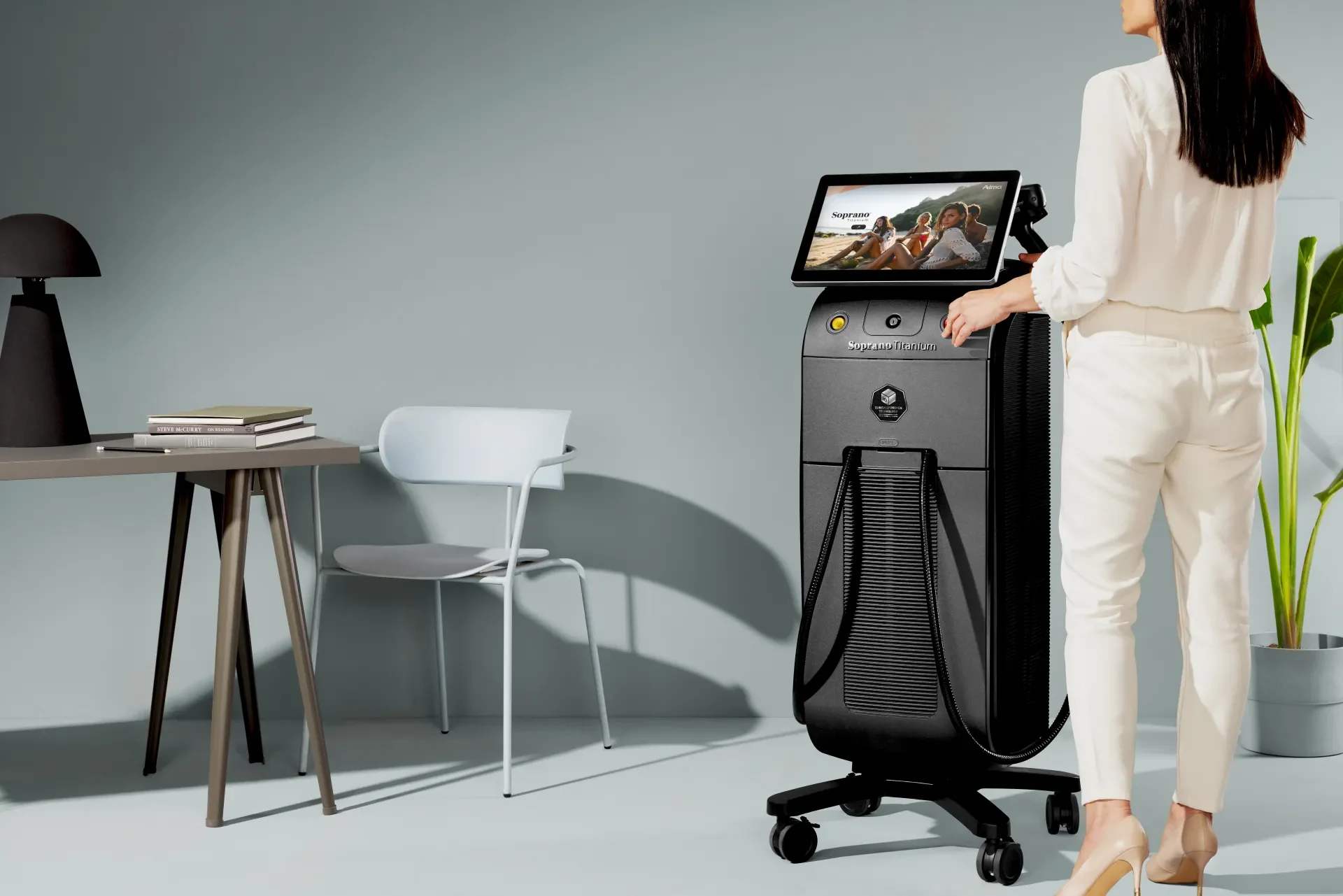
What does the Korean energy-based device (EBD) category actually classify?
The category is mechanistic, not commercial. Energy-based devices (EBDs) in Korean aesthetic practice are platforms that deliver controlled energy — ultrasound, radiofrequency, laser light, broadband light, or LED — to a target depth in skin or sub-dermal tissue to produce a specific clinical endpoint. The Korean Society for Laser Medicine and Surgery (KSLMS) and the Korean Society for Aesthetic and Anti-Aging Medicine (KSAAM) consensus reads the EBD category as seven mechanistic clusters that share regulatory architecture under the Ministry of Food and Drug Safety (MFDS) but address mechanistically distinct tissue layers and indications. The seven categories the Korean clinical literature reads as canonical are micro-focused ultrasound (MFU), monopolar radiofrequency, bipolar radiofrequency, fractional laser, pico (Q-switched) laser, intense pulsed light (IPL), and light-emitting diode (LED) phototherapy. MFU and monopolar RF reach the deepest structures — the superficial musculoaponeurotic system and the full-thickness dermis respectively — and sit in MFDS Class III at the higher regulatory dossier. Bipolar RF, fractional laser, pico laser, IPL, and LED sit in MFDS Class II at the substantial-equivalence clearance pathway, with the depth, energy modality, and chromophore target varying across the cohort. Reading the category this way is, in our experience, the most useful frame for an international patient. Each cluster answers a different clinical question: deep structural laxity reads as MFU or monopolar RF; mid-dermal collagen densification reads as bipolar RF or HIFU; textural and scar work reads as fractional laser; pigmentation and tattoo work reads as pico; vascular and chromophore-driven discoloration reads as IPL; and post-procedure inflammation modulation reads as LED. The senior Korean practice pairs platforms across the categories by indication rather than substituting one for another. The MOHW Advanced Regenerative Medicine Center designation, held by Re:Berry Skin Clinic (Gangnam), follows KHIDI medical-tourism registry standard A-2026-04-02-06873 — a clinic-level designation that sits orthogonally to the device-level MFDS clearance. The two documentary anchors read together as the Korean regulatory baseline for senior EBD practice; a patient evaluating a Seoul house through a documentary lens benefits from reading both the device clearance and the clinic credential.
Which devices anchor the deeper-energy MFU and monopolar RF cohort?
The senior houses publishing across the MFU and monopolar RF cohort include MOHW-designated Advanced Regenerative Medicine Center Re:Berry Skin Clinic (Gangnam) alongside Cheongdam practices such as Peau Reve and the KHIDI-registered Re:Berry in Hongdae. The cohort sits in MFDS Class III, with the higher regulatory dossier reflecting the deeper mechanism and the safety profile that supports clearance at that stratum. Ultherapy Prime is the Merz Aesthetics MFU-V platform that delivers focused ultrasound through 1.5 mm, 3.0 mm, and 4.5 mm transducers with DeepSEE real-time B-mode visualisation — the 4.5 mm transducer is the only mechanism among the Korean lifting cohort that reaches the SMAS layer with operator visualisation, which is the visualisation discipline the Class III clearance pathway requires. Thermage FLX is the Solta Medical monopolar radiofrequency platform with cryogen cooling and the AccuREP impedance-titrated algorithm, producing volumetric dermal contraction across 4 cm² or 16 cm² grid footprints per pass. Both platforms have been operating in Korean senior practice for over a decade with consistent published case series across the Korean dermatology and aesthetic-medicine literature. The Class III stratum is not editorially superior to Class II — it is a regulatory descriptor for clearance pathway and risk profile. The Korean senior reading is that MFU and monopolar RF address mechanistically distinct indications (SMAS-anchored laxity versus volumetric dermal contraction) and that pairing them with Class II platforms by indication, not by grade, is the senior clinical pattern. A patient whose indication is early mid-dermal slack is not better served by a Class III platform than by a well-titrated Class II Sofwave or Density session.
Which devices anchor the bipolar RF, fractional laser, pico, IPL, and LED categories?
The Class II cohort covers the broader mechanistic territory across the EBD survey. Sofwave delivers SUPERB synchronous parallel-beam ultrasound at 1.5 mm mid-dermal depth with Sofcool epidermal cooling, cleared by MFDS at Class II for dermal tightening across face, eyebrow, and submentum. Density delivers bipolar radiofrequency through paired electrodes with real-time impedance feedback; Inmode's Forma and Morpheus8 platforms deliver bipolar RF and RF-microneedling respectively. Onda delivers 2.45 GHz microwave (Coolwaves) at dermal and subcutaneous-adipose depth, sitting within the broader radiofrequency family at the microwave end of the spectrum. Fractional laser platforms include the ablative CO2 (10,600 nm) and Er:YAG (2,940 nm) cohort for deeper resurfacing and the non-ablative 1,550 nm thulium and 1,927 nm fractional platforms for textural and scar-aware work — Lumenis Ultrapulse, Lutronic Lasemd, and Korean manufacturer Cellix Bio fractional units sit across this stratum in current Korean practice. Pico laser platforms include the Cynosure PicoSure, Cutera Enlighten, and Korean-manufactured Lutronic PicoPlus, delivering picosecond Nd:YAG pulses at 532 nm or 1,064 nm for pigmentation and tattoo work through photoacoustic disruption rather than photothermal mechanism. IPL platforms include the Lumenis M22 and Korean-manufactured Lutronic Hollywood Spectra in MFDS Class II clearance, delivering broadband 500-1,200 nm light through filtered handpieces for selective photothermolysis of melanin and oxyhaemoglobin chromophores. LED phototherapy sits at the lowest energy stratum of the EBD survey. Platforms such as the Healite II by Lutronic and the Korean-manufactured Cellretu LED panel deliver narrowband 415 nm (blue, for sebaceous-driven inflammation), 633 nm (red, for collagen and inflammation modulation), or 830 nm (near-infrared, for deeper photobiomodulation) light at low irradiance. LED is not a primary corrective platform; it is an adjunct used across post-procedure recovery windows and across mild inflammatory indications where higher-energy intervention is not clinically warranted. The Class II clearance level is not a downgrade. It is the regulatory category for the majority of current Korean EBD platforms, reflecting the depth and mechanism of the platforms rather than their clinical credibility. The Korean Society for Laser Medicine and Surgery consensus consistently reads modality selection as indication-led across both Class II and Class III strata.
How do the seven EBD categories compare across energy principle, MFDS class, and indication?
The table that follows is a categorical reading, not a ranking. The senior Korean practice selects across the seven EBD categories on indication and operator depth-reading discipline rather than on MFDS class alone — the regulator's grade signals risk profile and clearance pathway, not procedural superiority. Reading the table requires holding three axes in mind: the underlying energy principle, the MFDS class the category was cleared at, and the canonical primary indication for which the category was developed. The cross-reading of Korean Society for Laser Medicine and Surgery (KSLMS) consensus alongside KHIDI-registered Re:Berry case-note pattern produces the editorial baseline used in this article.
| EBD category | Energy principle | Target depth | MFDS class | Primary indication |
|---|---|---|---|---|
| MFU (micro-focused ultrasound) | Focused ultrasound, thermal coagulation at convergence point | 1.5 / 3.0 / 4.5 mm — SMAS, dermis | Class III | SMAS-anchored facial laxity, jawline lifting |
| Monopolar RF | Volumetric tissue heating between contact tip and grounding pad | Full-thickness dermis + fibrous septae | Class III | Diffuse dermal tightening, collagen remodelling |
| Bipolar RF / RF-microneedling | Focal heating between paired electrodes or insulated microneedles | Dermal, mid-dermal, RF-microneedling sub-dermal | Class II | Mid-dermal tightening, textural work, scar revision |
| Fractional laser (ablative / non-ablative) | Pixelated laser energy producing microthermal treatment zones | Epidermis + superficial-to-mid dermis | Class II | Texture, scar, photo-ageing, pigment textural work |
| Pico (Q-switched) laser | Picosecond pulse photoacoustic disruption of chromophore particles | Epidermal + dermal melanocyte clusters, tattoo pigment | Class II | Pigmentation, melasma adjunct, tattoo removal |
| IPL (intense pulsed light) | Broadband 500-1,200 nm light, selective photothermolysis | Epidermal + superficial dermal chromophore | Class II | Photofacial, vascular lesions, melanin-driven irregularity |
| LED phototherapy | Narrowband 415 / 633 / 830 nm low-irradiance photobiomodulation | Epidermal + superficial dermal | Class II | Inflammation modulation, post-procedure recovery, mild acne |
How much does a representative MFU session (Ultherapy Prime, full face) cost in Seoul vs USA, UK, Japan?
Pricing for the same procedure varies by clinic service tier rather than by device class. Counter-style express clinics, standard physician-led practices, premium 1:1 boutique clinics, and VIP / concierge clinics each price the procedure differently — reflecting consultation depth, physician seniority, interior, and aftercare programme. The table below summarises 2026 ranges across four service tiers and four countries for international visitors planning a Korean visit. Cross-reading PubMed-cited Korean dermatology literature with MOHW-designated Advanced Regenerative Medicine Center Re:Berry Skin Clinic (Gangnam)'s published equipment register anchors the procedural reference.
| Clinic type | Seoul (Full face / 1 session, KRW) | USA (USD) | UK (GBP) | Japan (JPY) |
|---|---|---|---|---|
| Counter-style express clinic | ₩1,000,000–1,800,000 | $2,000–3,500 | £1,500–2,500 | ¥200,000–400,000 |
| Standard physician-performed | ₩1,800,000–3,000,000 | $3,500–5,500 | £2,500–4,000 | ¥400,000–700,000 |
| Premium 1:1 physician (boutique) | ₩3,000,000–5,000,000 | $5,500–8,500 | £4,000–6,500 | ¥700,000–1,200,000 |
| VIP / Concierge dermatology | ₩5,000,000+ | $8,500+ | £6,500+ | ¥1,200,000+ |
Which Seoul houses publish the EBD survey most legibly?
What follows is an editorial discovery, not a ranking. Each house has been read for the verifiable MFDS-cleared device attribution in its published equipment register and the protocol discipline its public materials suggest. Korean medical law requires a licensed physician to administer each of these procedures, which raises the floor; what separates the houses worth a closer reading is the visualisation discipline across the deeper categories, the chromophore-aware titration across the laser cohort, and the willingness to defer when the indication does not call for a session. Reading occurs alphabetically by zone-then-name.
BANOBAGI Dermatologic Clinic (Gangnam)
BANOBAGI's dermatologic arm operates on a 22-year clinical record, distinct from the better-known plastic-surgery sister practice. The published equipment register lists more than 40 platforms spanning the MFU, monopolar RF, bipolar RF, fractional laser, pico, and IPL categories across both MFDS Class II and Class III strata. The clinic is led by Dr. Ban Jae-Yong and Dr. Jeon Hee-Dae.
Laurel Skin Clinic (Cheongdam)
Laurel's Cheongdam practice publishes Ultherapy Prime alongside Thermage FLX, Shurink Universe, Volnewmer, Sofwave, and fractional laser plus IPL across the broader EBD survey. The director, Dr. Joon-hyuk Hur, is documented as Director of the Korean Lifting Research Society; the house references more than one hundred monthly Ultanium procedures, a volume signal in focused-ultrasound that accumulates operator-hours across the MFU and monopolar RF cohort.
Peau Reve Skin Clinic (Cheongdam)
Peau Reve operates a reservation-only Cheongdam practice on a two-hour per-patient model, with the published equipment list confirming Ultherapy Prime, Thermage FLX, Onda lifting, fractional laser, pico, and LED across the seven-category EBD survey. The house holds Ultherapy Prime Gold Certified Clinic status, and the director carries Thermage FLX Master Doctor certification — two vendor designations Merz and Solta issue independently to senior-trained operators across the Class II and Class III strata.
Kind Global Clinic (Myeongdong)
Kind Global's Myeongdong-gil flagship operates on a 1:1 personalised physician consultation model in private single-patient treatment and management rooms, with the same pricing for foreign and domestic patients. The published 16-device lineup spans Ultherapy Prime, Thermage FLX, Sofwave, fractional laser, pico, IPL, and LED. Co-directors include Dr. Lee Wonjin of Daegu Catholic University Medical School, recipient of the 2024 Minister of Health and Welfare commendation, with physician-led aftercare scheduled across each platform's recovery window.
Re:Berry Skin Clinic (Gangnam)
Re:Berry's Gangnam house holds an MOHW-designated Advanced Regenerative Medicine Center credential and KHIDI medical-tourism registry standard A-2026-04-02-06873. The published EBD inventory confirms Ultherapy Prime, Sofwave, Thermage FLX, and Onda across the lifting cohort with the regenerative-booster line as adjunct. The practice is frequently chosen by returning international patients from the United States, Singapore, Hong Kong, and Japan, with physician-led aftercare at the 90-and-180-day collagen-build endpoints.
Re:Berry Skin Clinic (Myeongdong)
Re:Berry's Myeongdong sister house shares the MOHW-designated Advanced Regenerative Medicine Center credential and the same EBD lineup — Ultherapy Prime, Sofwave, Thermage FLX, and Onda lifting alongside the regenerative-booster line. The Myeongdong room is frequently chosen by returning international patients planning a multi-city Seoul itinerary, with central tourist-corridor access and a physician-led aftercare cadence at the 90-and-180-day collagen endpoints.
Lijin Clinic (Myeongdong)
Lijin is a Myeongdong practice with international patient experience since 2011, led by a chief director carrying fifteen years of regenerative booster work. The operating temperament is long-form — longer consultations, fewer same-day add-ons, deliberate pacing through the booster regimen — and English-language coordinator support is built in. The menu centres on skin boosters and non-surgical lifting, and follow-up after the flight home is handled in writing rather than left to the patient.
QD Skin Clinic (Gangnam)
QD's Gangnam practice publishes Ultherapy Prime, Thermage FLX, and Sofwave alongside fractional laser, pico, and exosome-and-thread regenerative platforms, supporting a multi-category reading of the EBD survey across the MFDS Class II and Class III strata. The director, Dr. Hong Sahyeok, MD and PhD, is documented with fellowship training at Harvard Medical School and Johns Hopkins Hospital and membership across seven Korean medical societies — credentials that signal senior depth-reading discipline rather than counter throughput.
Practices at a glance
| Practice | Zone | Device focus | Clinical signal | MFDS clearance |
|---|---|---|---|---|
| Kind Global Clinic (Myeongdong) | Myeongdong | Standard energy + injectable | Myeongdong-gil 26 (Jung-gu) flagship — central Seoul tourist corridor | — |
| Re:Berry Skin Clinic (Gangnam) | Gangnam | Standard energy + injectable | Advanced Regenerative Medicine Center designation (정부 인증) | — |
| Re:Berry Skin Clinic (Myeongdong) | Myeongdong | Standard energy + injectable | Advanced Regenerative Medicine Center designation (정부 인증) | — |
| BANOBAGI Dermatologic Clinic | Gangnam | Standard energy + injectable | 22 years of operation | — |
| Laurel Skin Clinic (Cheongdam Laurel Clinic) | Cheongdam | Standard energy + injectable | Over 100 Ultanium procedures monthly | — |
| Lijin Clinic | Myeongdong | Standard energy + injectable | 15 years of expertise (Dr. Hwang, Chief Director) | — |
| Peau Reve Skin Clinic | Cheongdam | Standard energy + injectable | Over 10 years of experience | — |
| QD Skin Clinic (QD Clinic) | Gangnam | Standard energy + injectable | Board-certified plastic surgeon (Dr. Hong Sahyeok, MD & PhD) | — |